+441278550640
  info@proswimwear.co.uk
  UK DELIVERY OVER £35



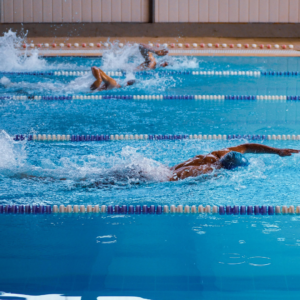



As the fastest and most efficient of the four main swimming strokes, even the slightest change to your freestyle swimming technique can have a huge impact on performance.
Freestyle, also known as front crawl, is the stroke of choice for swimmers looking for maximum speed and fast times.
At the time of writing, the fastest long course 50m freestyle time in the world is Cesar Cielo’s 20.91. That compares to world records in the butterfly (22.27), backstroke (24.00) and breaststroke (25.95).
There are several key elements that must come together perfectly to get your freestyle technique spot on. If one is not performed correctly, it will adversely affect your whole stroke.
In association with the swim experts at TYR, we have come up with four top freestyle swimming tips that you can start working on in the pool now.
We’ll look at body position, kicking and breathing, as well as how to perform the most efficient tumble turn (also known as a flip turn). Each tip comes with an easy-to-follow video guide and helpful advice.
If you can master these four techniques shown below, you’ll soon start shaving crucial seconds, or milliseconds, off your freestyle times.
How to achieve the proper body position for your freestyle stroke
Perfecting a streamlined body position in the water is vital for you to reduce drag and maximise your efficiency and speed. Concentrate on these three key areas:
HEAD POSITION: To begin, make sure your head is in line with your spine. If it isn’t, it will cause your hips to drop and create unneccessary resistance in the water.
Next, keep your face down with your eyes looking slightly forward. When you don’t need to take a breath, your head should remain still and your core should feel tight and lengthened.
STROKE EXTENSION: While you’re swimming, focus on extending your reach by rotating your body on each side during each stroke.
KICK CONSISTENCY: A consistent kick coupled with core rotation will help to keep your hips high in the water and your body horizontal.
How to kick properly to improve your freestyle technique
Kicking is where you generate a lot of your propulsion, so a proper kicking technique is essential for not only powering your stroke, but also ensuring you have correct hip rotation.
A strong kick will ultimately help you to stay high in the water as you move. You should kick from the hip with a relatively straight leg. A slight microbend will naturally occur, this is okay.
Squeeze your glutes together to keep your knees from bending too much. Always kick with pointed toes. Your foot and calfs should be mostly relaxed. This will allow you to maintain a streamlined position.
Keep a tight narrow consistent kick. The foot should graze the top of the water, but never fully exit.
TRAINING TIP
To help improve your kicking technique, focus on maintaining a consistent rhythm alongside the timing of your hip rotation. Your goal should be to create a controlled and steady cadence, even while you breathe.
How to breathe properly when swimming freestyle
Proper breathing technique is the key to maximising your stroke performance. When breathing correctly, your muscles are supplied with oxygen, promoting efficiency as you move.
As your fingertips enter the water and your hand finishes past your thigh, keep your body straight, only moving your head as you turn to breathe. Roll your head slightly so one goggle lens is still in the water. Take a quick breath through your mouth and place your face back into the water face-down.
With your eyes looking forward, immediately begin to exhale. Always exhale while your face is in the water. Strong exhalation will keep your muscles more relaxed and lead to better overall body positioning.
TRAINING TIP
To help with the important task of exhaling, practice humming through your nose or mouth. Your goal should be to maintain a constant stream of bubbles during your swim.
How to perform the perfect freestyle turn
A tumble turn (or flip turn, as it’s known in the USA) is the most efficient way to change direction during your stroke. Start the initial movement of your flip during your last stroke coming in to the wall. To do this, begin by dropping your chin to your chest.
Next, drive your forehead towards your knees, curling up into a ball. Finally, land both feet on the wall to prepare for your push off. Be sure that both legs are shoulder-width apart and in line with your hips while your arms are in a tight streamlined position.
Push and twist your body on to your stomach and continue your swim.
TRAINING TIP
Knowing when to start your turn takes practice. Use the T at the end of the pool’s floor line to help you gauge when to begin.
Top 5 training aids for improving freestyle technique
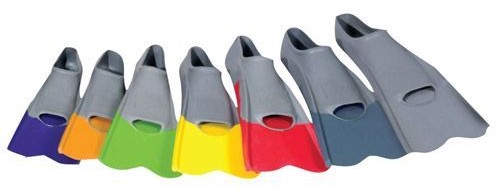
TRAINING FINS
Using training fins while practising will help to increase resistance in the water, strengthen your leg muscles and improve ankle flexibility.
Fins will also help your positioning by keeping your hips aligned correctly and prevent them from dropping, and can also help support your body when you’re concentrating on developing your breathing technique.
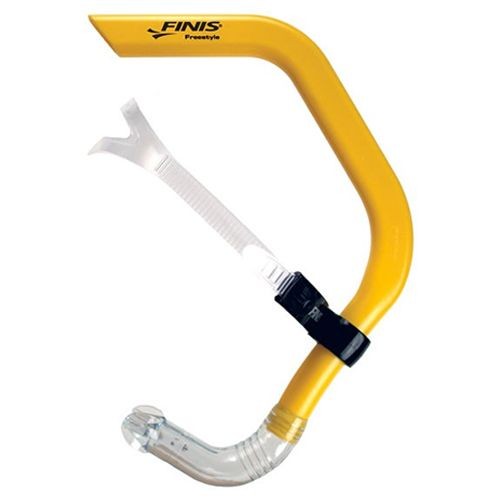
CENTRE SNORKELS
Training snorkels allow you to put all your focus on body position and swimming technique, without having to worry about a breathing action.
Wearing a training snorkel will help you get used to the neutral head position required for the perfect freestyle stroke technique.
For further advice on using a training snorkel, click here to read our blog article called Use A Training Snorkel For A Faster Swim.
Training snorkels such as the FINIS Freestyle Snorkel have been specifically designed with the freestyle stroke in mind.
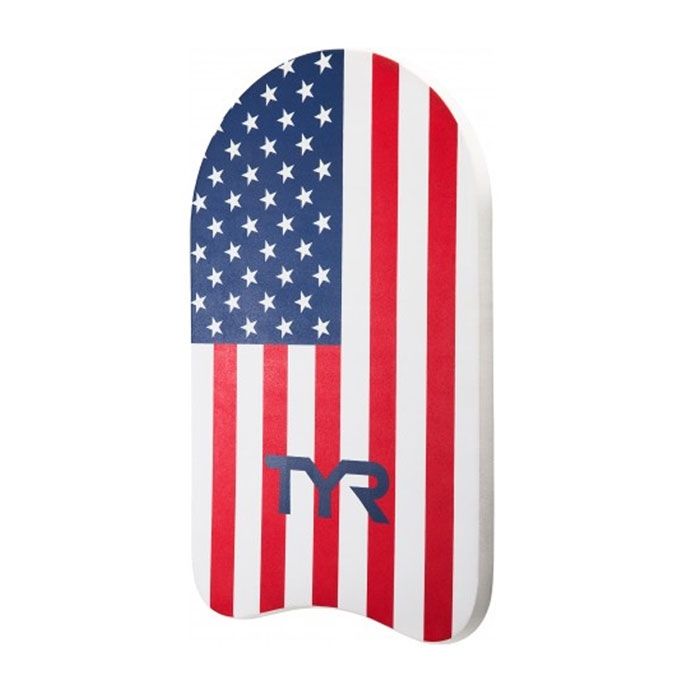
KICKBOARDS
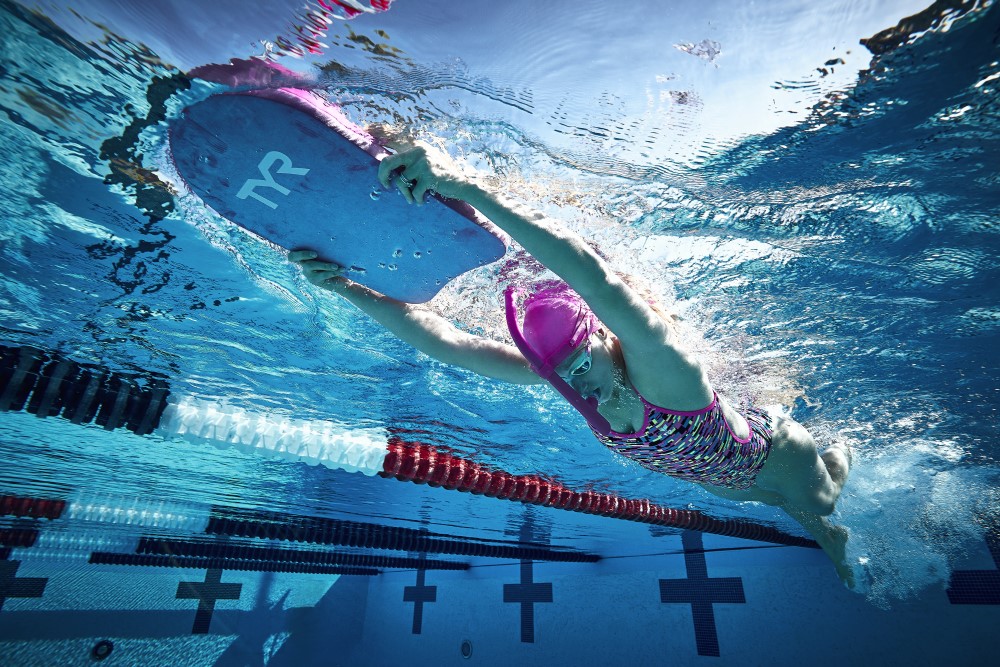
Kickboards are great training aids for helping you improve your kick technique.
The increased buoyancy provided by swimming with a kickboard helps to isolate your lower body, which will help you to develop leg strength and power.
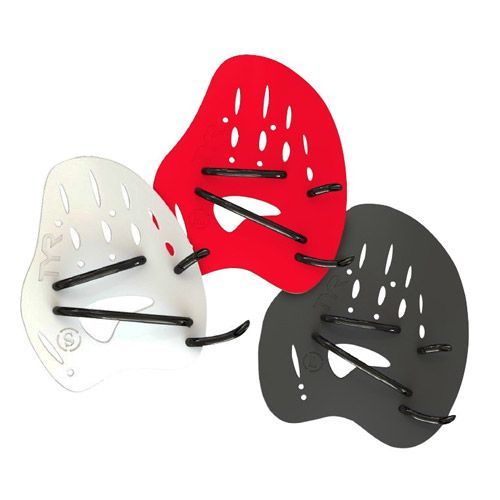
PADDLES
Using paddles can really help you develop your freestyle stroke technique.
Finger paddles allows the surface area of the palm to be exposed, giving you more feel of the water. This helps you concentrate on hand positioning, improving both catch position and arm pull.
Paddles will encourage high elbows and correct hand entry, while building muscle strength and improving speed and technique.
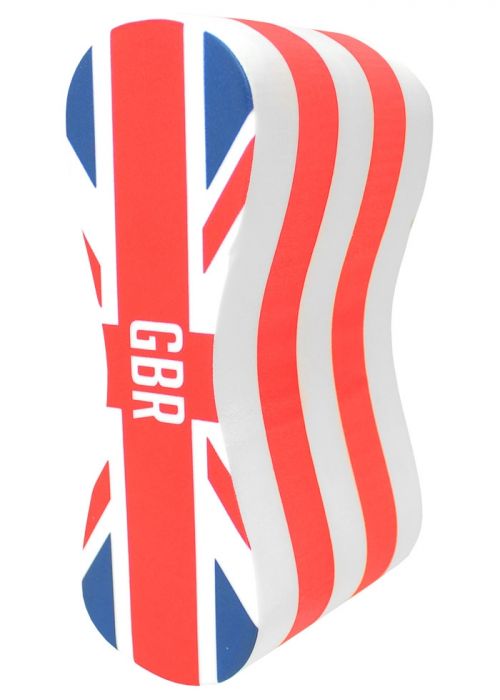
PULL BUOYS
Swimming with a pull buoy will help you develop your arm strength and freestyle technique.
By placing it between your thighs when you swim, you’ll raise and support your lower body in the water which will allow you to concentrate on your arm movement.
As a result, your upper body muscles will be forced to do the propulsion work which will also help with strength and stamina.