+441278550640
  info@proswimwear.co.uk
  UK DELIVERY OVER £35








Welcome to our new TRIangle series, which takes an in-depth look at your triathlon swim training with the help of three tri experts.
With exclusive articles from qualified British Triathlon coach James Hester, sports nutrition expert Renee McGregor and sports massage practitioner Anna Maria Matezieri, TRIangle will cover all aspects of your triathlon training and provide tips and advice that will help you become a better athlete.
Part 1 by Renee McGregor – leading performance nutritionist who has worked with Team GB
Nutrition plays an integral part in supporting your swim training, resulting in optimal performance.
Most of us know that in reality, regardless of what level of athlete you are, nutrition is not rocket science, but for some reason we like to make it complicated; it seems the majority of us like to be faced with a set of rules and a list of ‘must have, energy boosting, performance enhancing’ foods; with many skipping to this prior to getting the fundamentals right.
It is only then do we really feel like we are ‘taking control’ of our nutritional intake.
Nutrition for swimmers is about delivering enough energy to working muscles, enabling you to complete those tough sessions, which will allow for progression and improvement; it is also about recovery and developing strength.
It is not about, over restricting and never deviating from a set of very rigid rules.
In fact, all this leads to is resentment, misery and in extreme cases obsessive behaviours that can result in long term health consequences.
The key is to look at your training week and then tailoring your food choices against this.
Contrary to popular belief, this does not mean filling up on plates of carbs before every session but it equally does not mean going low carb, high fat.
By learning to periodise your nutrition to your training needs, you will also reap the rewards of the body adapting, improving body composition and performance.
Here are some top tips to get you on point with your nutrition and training.
1) Plan ahead
In order to really benefit from your training plan, it is important that you plan ahead so you know what to eat, and when.
Indeed, nutrient dense carbs such as oats, whole grains and sweet potato are very useful for fuelling up before high intensity sessions which would include hill repeats, intervals or long endurance BRICK sessions over 90 minutes long.
However, they are not so important before slower more moderate paced sessions.
In these latter cases, while carbohydrates should not be all together avoided, they can be replaced with less carbohydrate dense but still nutrient packed options such as root vegetables, pulses and fruit.
2) Know your recovery window
We’ve all been told about the 30-minute recovery window but how important is this in reality?
In reality, this only becomes relevant to you if you are planning on two training sessions within 12 hours or, if your next meal is over two hours after finishing your high intensity training session.
This means then that for the majority of us who are only training once a day, our next meal is sufficient for recovery.
3) Think about a 24-hour plan
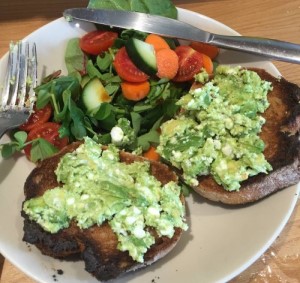
Don’t just think about your nutrition in the meal or snack immediately before your training; if this is going to be a high intensity session, you actually need to think about getting a regular intake of carbohydrates at all meals and snacks during the 24 hours prior to your session.
This will ensure that you have sufficient glycogen stores to maintain a consistent pace throughout your session. Only when you get consistent training, can your muscles adapt and progression can occur.
Practically, this translates to around a fist size portion of carbs at meals and half-a-fist size portion of carbs at 1-2 snacks a day in the lead up to high intensity sessions.
4) Don’t ditch the dairy
With so many food bloggers evangelising dairy free milk alternatives such as almond, coconut and hemp, it is important to know that cow’s milk is actually one of the best recovery options you can choose post training.
Not only does it have the right proportions of carbohydrate to protein to encourage muscle recovery, it also has the best composition with easily digestible carbohydrates and protein, making uptake by the muscle more efficient.
In comparison, if you look at shop bought almond milk as an example, it is just expensive water.
Dairy foods also contain calcium and this has been demonstrated to have beneficial effects on body composition, helping you to maintain a higher percentage of lean muscle mass.
5) Don’t over-restrict
For those of you who want to lose weight, there is a tendency to over restrict – this means often avoiding eating before you train or worse still, not consuming energy on longer sessions, over 60 minutes.
If anything, this has a negative impact. Firstly, you won’t be able to train to your full potential as your energy levels will be low.
Secondly, in order to be successful during races, you have to train your body to accept nutrition – the only way you can do this is to practise in training; by not taking on fuelling during your long runs, you are more likely to encounter tolerance problems in your races.
Conclusions…
The final word on nutrition is to appreciate that, if you over restrict your nutritional intake but still put physical demands on the body, it tends to slow down other processes within the body and thus your whole metabolism, in order to prioritise movement.
This means that longer term, your body actually holds onto more body fat rather than utilise it.
So while we hear a lot of about the value of being lighter for performance, starvation is not the best principle for weight loss in those of us who are very physically active.
In addition, its important to be realistic; most athletes are already on the lower end of normal for their acceptable weight range, this means that they are probably already at their optimal weight for performance.
Going lower, while may initially result in an improved performance, is not sustainable. At some point the body hits and breaks down, leaving you at a higher risk of injury and illness.
Be mindful of choices, using the guidelines above and don’t deprive yourself of any food group.
Don’t use exercise as an excuse to have a treat; allow yourself to enjoy a piece of cake or a croissant or a dessert on a regular basis (once a week for those wanting to lose weight and 3-4 times a week for those who are maintaining weight), as part of a balanced lifestyle.
In this way, we banish the concept of ‘good’ or ‘bad’ foods as athletes and optimise our chance for heightened performance, without causing obsession or unhelpful extreme behaviours.

About Renee McGregor
A leading performance specialist dietician, Renee has worked with elite athletes, sports scientists and coaches to develop nutrition plans to maximise performance.
With features on the BBC, in magazines and at live talks, Renee makes her wealth of knowledge easy to understand and put into action. She will be covering fuelling, recovery and training/racing on a sensible and sustainable basis.
You can follow Renee on Twitter and Instagram, or find out more at http://reneemcgregor.com