+441278550640
  info@proswimwear.co.uk
  UK DELIVERY OVER £35







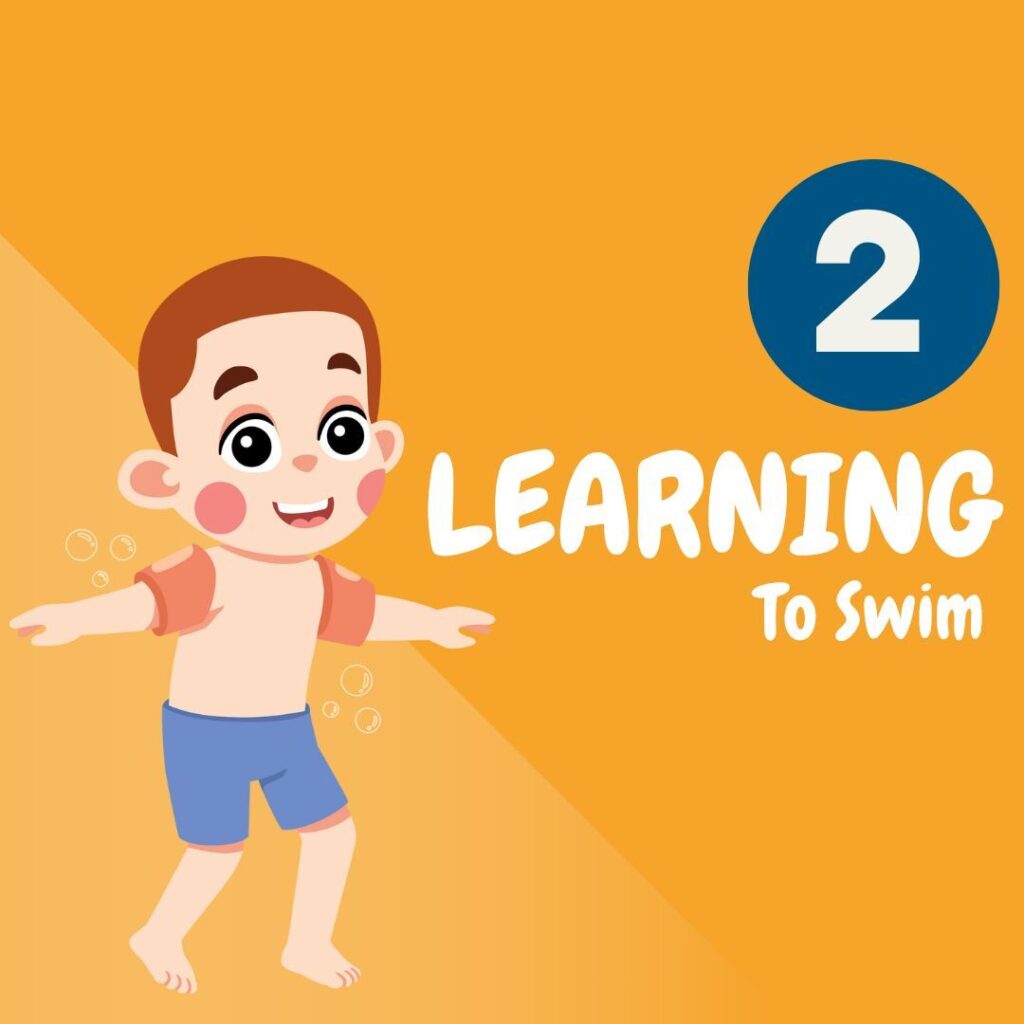
Congratulations on successfully completing the first stage of teaching your baby to swim! Now, let’s dive into the second stage: learning to swim. At this point, your baby has become familiar with the water, you’ve been taking them to the pool regularly for around a year, and they’re ready to take the next steps toward independent swimming.
As we highlighted in our previous article “Stage 1: First Steps in the Pool“, the best way to teach your child to swim is by engaging in local baby and parent swim classes. You’ll benefit from professional guidance and support in your baby’s journey to proficient swimming. Here are our top tips for stage 2 of your child’s development:
1. Water Exploration:
Begin by encouraging your baby to explore the water independently. Support them under their arms while they kick their legs and move their arms in the water. This activity helps them develop muscle strength and coordination.
At this stage, a float vest or arm bands is a great investment, giving them confidence to start exploring on their own, while feeling safe.
2. Floating Techniques:
Introduce your baby to different floating techniques. Start with back floating, supporting their head and allowing them to experience the sensation of buoyancy. Gradually progress to front floating, always ensuring their comfort and safety.
3. Submersion Skills:
Building on the previous stage, continue practicing submersion with your baby. Start with short, controlled dips underwater, gradually increasing the duration as they become more confident. Maintain constant supervision and ensure their comfort throughout.
4. Propulsion Exercises:
Help your baby practice propulsion movements by holding them under their arms and encouraging them to kick their legs and move their arms in a swimming motion. This activity strengthens their muscles and introduces them to the basics of swimming strokes.
5. Breath Control:
Teach your baby breath control techniques by gently blowing bubbles in the water. Encourage them to imitate the action and gradually progress to exhaling underwater. This helps them learn to control their breathing while swimming.
6. Water Safety Skills:
Introduce basic water safety skills, such as holding onto the pool edge, kicking to the wall, or reaching for a floating object. These skills promote water confidence and can be important in emergency situations.
Remember, every baby progresses at their own pace, so be patient and supportive. Celebrate their achievements and provide a positive and encouraging environment. Always prioritize safety and remain vigilant during water activities.
Teaching your baby to swim is a journey that instills a love for water and promotes essential life skills. By focusing on learning to swim in this second stage, you’re setting a strong foundation for your baby’s future aquatic adventures. Stay tuned for the next installment in our series, where we’ll explore advanced swimming techniques for your growing little swimmer.
Read more articles in our “Learn to Swim” series: