+441278550640
  info@proswimwear.co.uk
  UK DELIVERY OVER £35



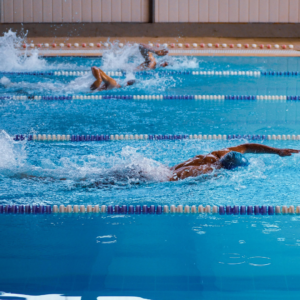





You can train for hours, perfect your technique, and hit every split in practice but the moment you step on the block, it’s your mind that determines whether you soar or sink.
In competitive swimming, the battle isn’t just in the water it’s in your head. Whether you’re a sprinter chasing hundredths of a second or a distance swimmer pushing through pain and fatigue, mastering your mindset can be the edge that sets you apart.
In this post, we’re diving into the mental game of swimming, the challenges, the tools, and the strategies to help you develop the same mental toughness elite swimmers use to perform under pressure.
Why the Mental Game Matters
Swimming is a physically demanding sport, no doubt. But at the highest levels, most athletes are physically similar, what separates the great from the good often comes down to mental strength.
The ability to stay calm under pressure, trust your training, bounce back from failure, and stay laser-focused can mean the difference between a personal best and a disappointing finish.
Olympic gold medalist Michael Phelps once said, “You can’t put a limit on anything. The more you dream, the farther you get.” But dreaming alone isn’t enough, you need the mental tools to handle everything that comes with competition: nerves, fear, doubt, and even success.
Common Mental Challenges Swimmers Face
Even the most experienced swimmers struggle mentally from time to time. If you’ve faced any of the challenges below, you’re not alone:
-
Pre-race anxiety: The butterflies, the nerves, the self-doubt before stepping on the block.
-
Fear of failure: Worrying about disappointing your coach, team, or yourself.
-
Burnout: Losing motivation after long training blocks or plateaus.
-
Overthinking: Getting stuck in your head during races instead of letting your body do what it’s trained to do.
-
Comparison: Measuring your progress against teammates or competitors rather than focusing on your own path.
These challenges are natural but you don’t have to let them control your performance.
Mental Training Techniques That Work
Just like physical training, mental toughness takes consistent practice. Here are proven techniques to strengthen your mindset:
1. Visualization
Before races, take time to mentally rehearse your swim from the walk to the blocks to every stroke and turn. Picture yourself swimming with power, confidence, and ease.
✅ Tip: Use all your senses: feel the water, hear the crowd, see the finish.
2. Positive Self-Talk
Replace negative thoughts with empowering ones. Instead of thinking, “I’m not ready,” try, “I’ve trained hard and I’m prepared.”
✅ Tip: Write down 3 personal affirmations and repeat them daily or before practice/meets.
3. Breathing & Mindfulness
Use deep breathing to calm nerves and reset your focus. Mindfulness (being fully present) can help you stay grounded before races or during tough sets.
✅ Tip: Try the 4-7-8 breathing technique before stepping up to race: inhale for 4, hold for 7, exhale for 8.
4. Create a Pre-Race Routine
Having a consistent warm-up and mental prep routine can give you a sense of control and calmness on race day.
✅ Tip: Include music, visualization, stretching, or mantras that get you in the zone.
How to Bounce Back from a Bad Race
Every swimmer has off days, what matters is how you respond.
-
Don’t dwell: Give yourself 10 minutes to feel it, then move on.
-
Review and learn: Ask yourself what went wrong and what you can improve without being overly critical.
-
Reset your focus: Remember that one race doesn’t define you. Use it as motivation.
The Role of Coaches and Teammates
You don’t have to manage the mental load alone. Coaches, teammates, and even sports psychologists can help.
-
Coaches can guide you with honest feedback and encouragement.
-
Teammates can offer support and remind you you’re not alone.
-
Parents (if you’re a youth swimmer) can help keep perspective and reinforce positivity.
Your mindset is a muscle, the more you train it, the stronger it gets.
The best swimmers in the world don’t just swim laps, they visualize, reset, affirm, and focus. They develop tools to manage nerves and bounce back from setbacks. And most importantly, they believe in themselves.
So the next time you dive in, bring your mind with you: sharp, confident, and ready to rise.